I Was 38, Exhausted, and Convinced I Was Just Getting Old. Then I Saw What Researchers Found Inside Men's Testicles.
I want to tell you about the worst morning of my life.
Not because something terrible happened. But because nothing happened. Again.
I woke up at 6:15. Alarm screaming. Hit snooze twice. Dragged myself to the bathroom and stared at a face I barely recognized. Puffy. Tired. Forty pounds heavier than five years ago. And behind the eyes... nothing. No fire. No plan. No drive.
My wife had stopped asking "what's wrong?" months ago. She knew I didn't have an answer. I didn't have one for myself either.
I was 38. I had a good job. Healthy kids. No reason to feel this way.
But every single day felt like I was dragging a sled through mud.
The brain fog was the worst part. I used to be sharp. The guy in the meeting with the answer before anyone finished the question. Now I'd lose my train of thought mid-sentence. Forget why I walked into a room. Stare at my laptop for twenty minutes before I could focus on anything.
My gym results? Gone. I was lifting the same weight I lifted three years ago, actually less, and recovering slower. The gut showed up out of nowhere around 35 and just... stayed. Diet didn't change. The gut didn't care.
And the sex drive. I'm not going to get graphic. But when your wife rolls over at night and you feel nothing, not even a flicker, you know something is seriously wrong.
I told myself it was stress. Aging. Bad sleep. Work.
I told myself a lot of things.
I spent $600 on supplements that did absolutely nothing.
I spent the next year and a half throwing money at the problem.
Ashwagandha. That was first. Supposed to lower cortisol, support testosterone. Took it for six weeks. Nothing.
Tongkat ali. The one Huberman talked about. Took it for two months. Maybe a slight bump in the first week. Then back to baseline. Sixty bucks gone.
Zinc. Magnesium. Vitamin D. Fenugreek. Shilajit. I had a shelf in my bathroom that looked like a supplement store had a garage sale.
I even looked into TRT. Sat in a clinic waiting room with fluorescent lights and a clipboard full of questions about my erections. The doctor said my levels were 410. "Normal range," he said.
Normal range. I wanted to throw the clipboard at him.
410 might be "normal" on a chart. But I was 38 years old and I felt like I was 65. Something was wrong and this guy's answer was "you're fine."
I left that clinic angrier than when I walked in.
I wasn't fine. I knew I wasn't fine. And I was running out of things to try.
Researchers found plastic in 100% of men's testicles. That's when everything clicked.
I was scrolling one night, the way you do when you can't sleep and you're too tired to do anything useful, and a study popped up on my feed.
"Microplastics Found in 100% of Human Testicles Tested."
I almost kept scrolling. It sounded like clickbait.
But something made me tap it. And when I started reading the actual study, my stomach dropped.
Researchers at the University of New Mexico had analyzed testicle tissue from 23 men. Not a huge sample. But the finding was unanimous.
Every. Single. Sample. Had plastic in it.
Not traces. Not "negligible amounts." The average concentration was 329 micrograms per gram of tissue. That's nearly three times what they found in dogs.
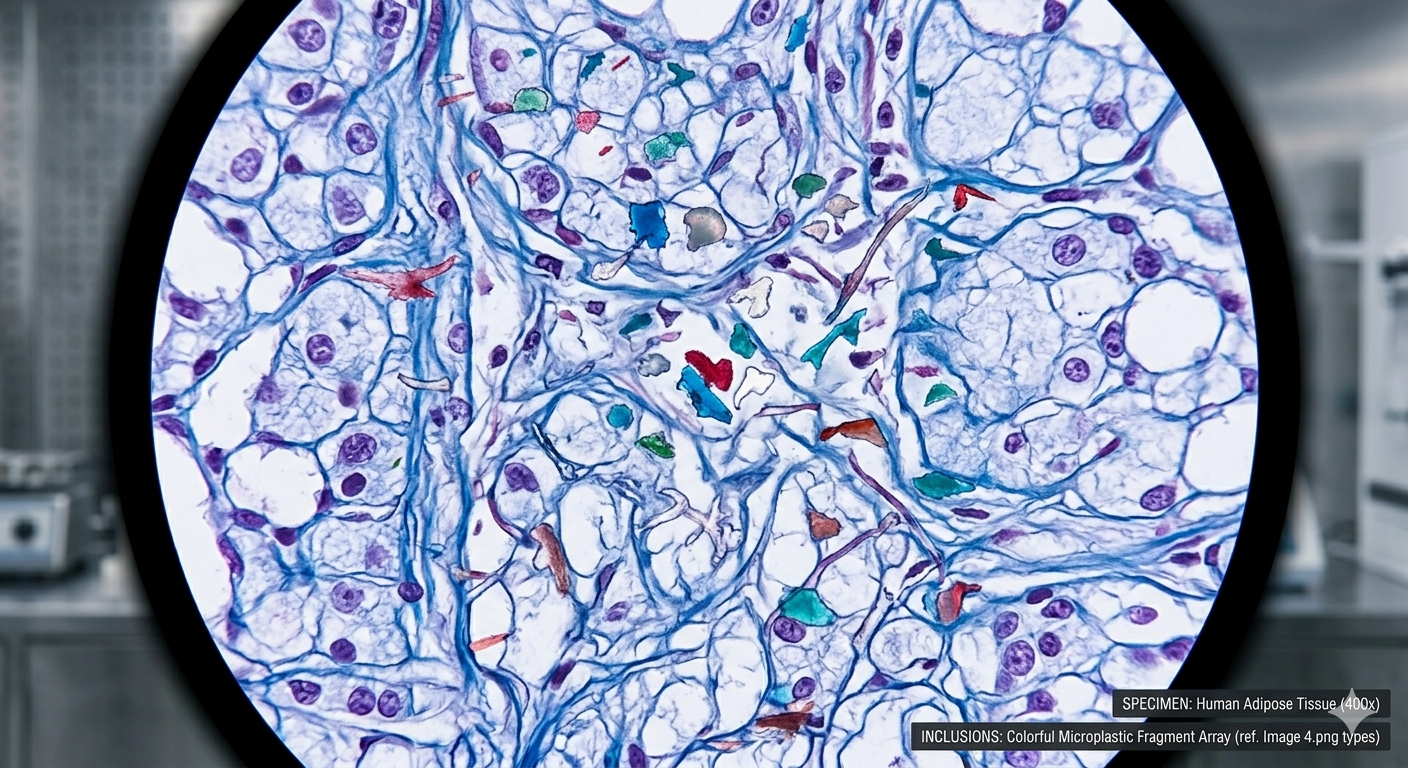
Dogs. Animals that chew on shoes and drink from puddles had less plastic in their testicles than we do.
The most common type they found? Polyethylene. That's the plastic in water bottles. Food containers. Grocery bags. The stuff we touch, eat from, and drink out of every day of our lives.
The study was published in Toxicological Sciences. Peer-reviewed. Covered by CNN, Scientific American, Newsweek. Not some fringe blog.
And that night, lying in bed, staring at the ceiling, I had a thought that wouldn't leave me alone:
If there's plastic in my testicles, and my testicles are where testosterone is made, what is that plastic doing to me?
The plastic isn't just sitting there. It's destroying your testosterone from the inside.
I found study after study. Not theories. Not opinions. Published, peer-reviewed research.
Here's what I learned:
Microplastic particles don't just sit in your tissue like dust on a shelf. They accumulate in the exact cells responsible for producing testosterone. The only cells in your body that do that job.
Once they're in there, they do damage three ways.
They physically latch onto testosterone molecules. Grab them. Hold them. Your body makes the testosterone but the plastic won't let it go. So your levels might even look "okay" on a blood test, but the testosterone isn't getting where it needs to go.
They damage the cellular machinery. The equipment your body uses to produce testosterone starts breaking down. Not from age. From plastic grinding away at it from the inside.
And they jam the signal between your brain and your testes. Your brain says "produce testosterone." The plastic garbles that signal. Production drops.
Multiple studies. Multiple journals. Toxicological Sciences. Particle and Fibre Toxicology. American Journal of Men's Health.
And suddenly every symptom I'd been living with made perfect sense.
The fatigue. The fog. The dead sex drive. The belly fat. The supplements that didn't work.
It wasn't aging. It wasn't stress. Something was inside me, physically destroying my ability to function as a man. And it had been there for years.
Every testosterone booster you've tried was aimed at the wrong problem.
Every testosterone booster I'd bought. Every $60 bottle of tongkat ali. Every stack I'd tried. They were all doing the same thing.
Pressing the gas pedal.
Every single one was trying to make my body produce more testosterone. More, more, more. That's all they do.
But you know what none of them did?
Remove the thing that was destroying it in the first place.
You're flooring the gas pedal on a car with the parking brake locked. The engine is screaming. You're burning fuel. But the car isn't moving.
That's what every testosterone booster does when there's plastic sitting in the cells that produce testosterone. It doesn't matter how hard you push production if something is physically tearing it down from the inside.
No wonder nothing worked. I wasn't broken. The supplements weren't all fake. They were just aimed at the wrong problem.
A university in Texas discovered how to remove microplastics. They just didn't know it yet.
Forget boosting testosterone. Can you remove the plastic?
And that's when I found the research that no one in the supplement industry had seen. Because it wasn't published in supplement journals. It was published in water treatment journals.
A team at Tarleton State University in Texas, led by a researcher named Dr. Rajani Srinivasan, had discovered that plant compounds from okra could physically bind to microplastic particles and remove them from water.
Not filter them. Not break them down. Physically grab onto them. Clump them together. Pull them out.
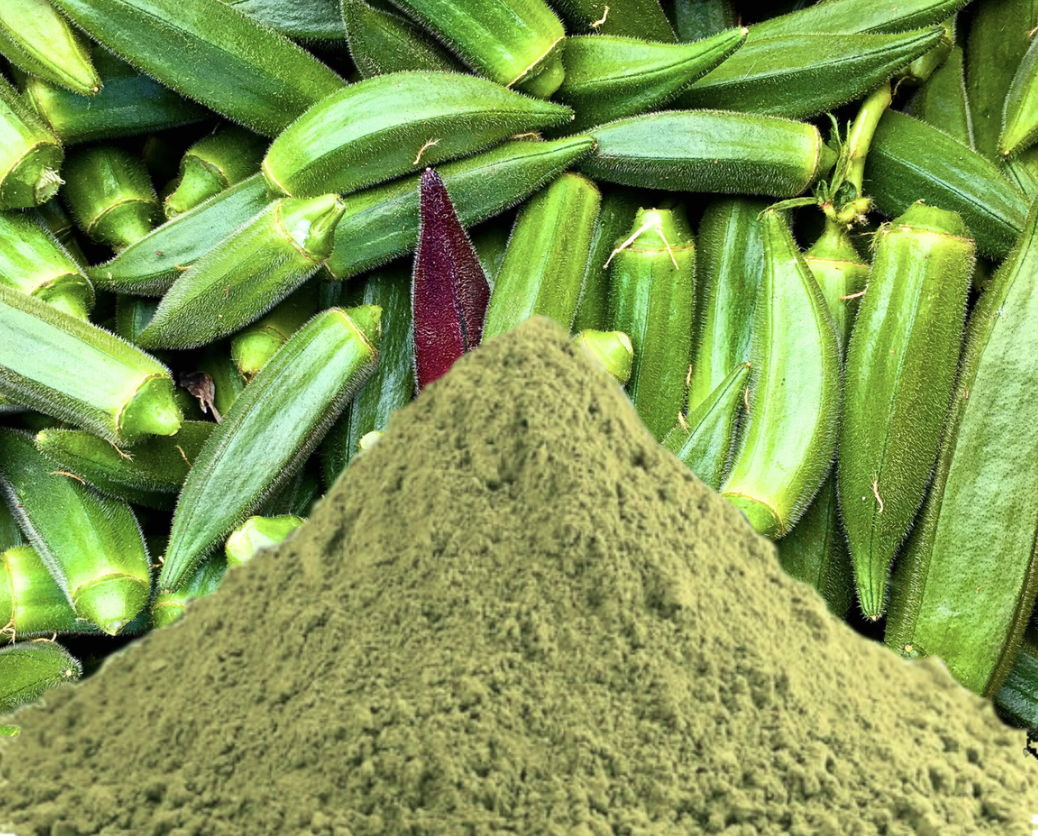
Published in ACS Omega. That's a journal run by the American Chemical Society, one of the largest scientific organizations on the planet.
Separately, a human clinical trial, published in the European Journal of Clinical Nutrition, showed that tamarind extract increased toxic excretion by 37% in just 18 days. In people. Not rats. People.

And a follow-up study showed tamarind could pull contaminants already stored deep in bone tissue. Not just new stuff floating through your system. The old stuff. The stuff that's been accumulating for years.
Two plant compounds. One grabs the plastic. The other goes after what's already stored.
And nobody, not one person, had connected these dots for human use.
The scientists were trying to clean rivers. They had no idea what they'd found could work inside the human body.
Morning wood came back in two weeks. By week six, my wife noticed before I said anything.
I sourced the extracts. Started taking them daily. I didn't tell my wife. I didn't tell anyone. I'd been burned too many times to get anyone's hopes up.
Week one. Nothing dramatic. Slept a little better maybe. Could've been placebo.
Week two. Morning wood came back.
I need to be specific about this because it matters. I don't mean a random occurrence. I mean every morning. Strong. Consistent. Like a switch got flipped. That hadn't happened in over a year.
Week three. The fog started lifting. I caught myself in a meeting actually paying attention, not faking it. I drove home and realized I hadn't thought about being tired once the entire afternoon.
Week four. I went to the gym and added weight to the bar for the first time in months. It wasn't dramatic. Just ten pounds on the bench. But it was the first time the arrow pointed up instead of down.
Week six. My wife looked at me across the dinner table and said something she hadn't said in a long time.
"You seem like you again."
I hadn't told her a thing. She noticed on her own.
The first formula built to flush plastic from your body. Not boost testosterone. Remove what's killing it.
I didn't discover anything. The scientists did the work. I just connected dots that were sitting in plain sight in journals nobody in the supplement industry bothers to read.
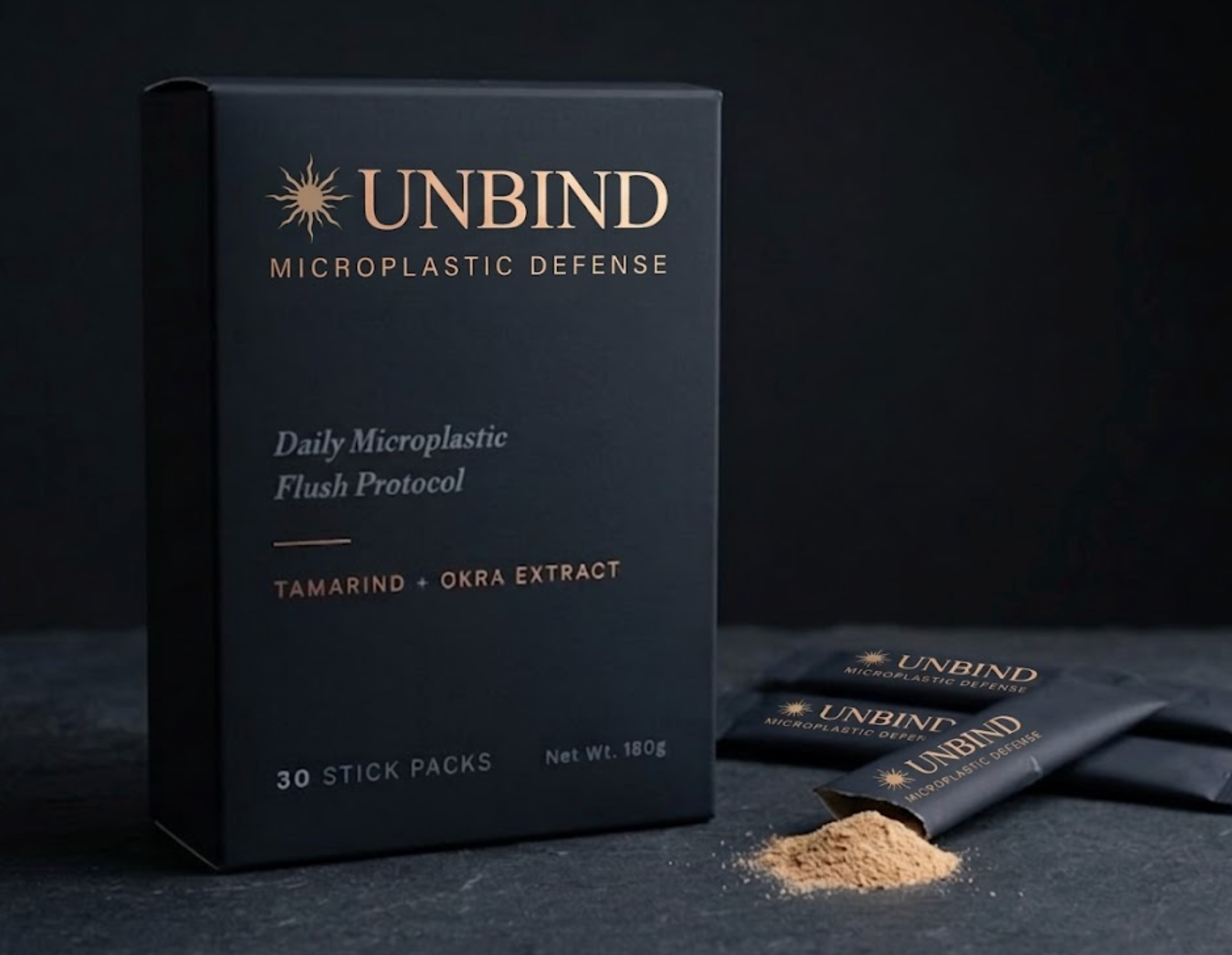
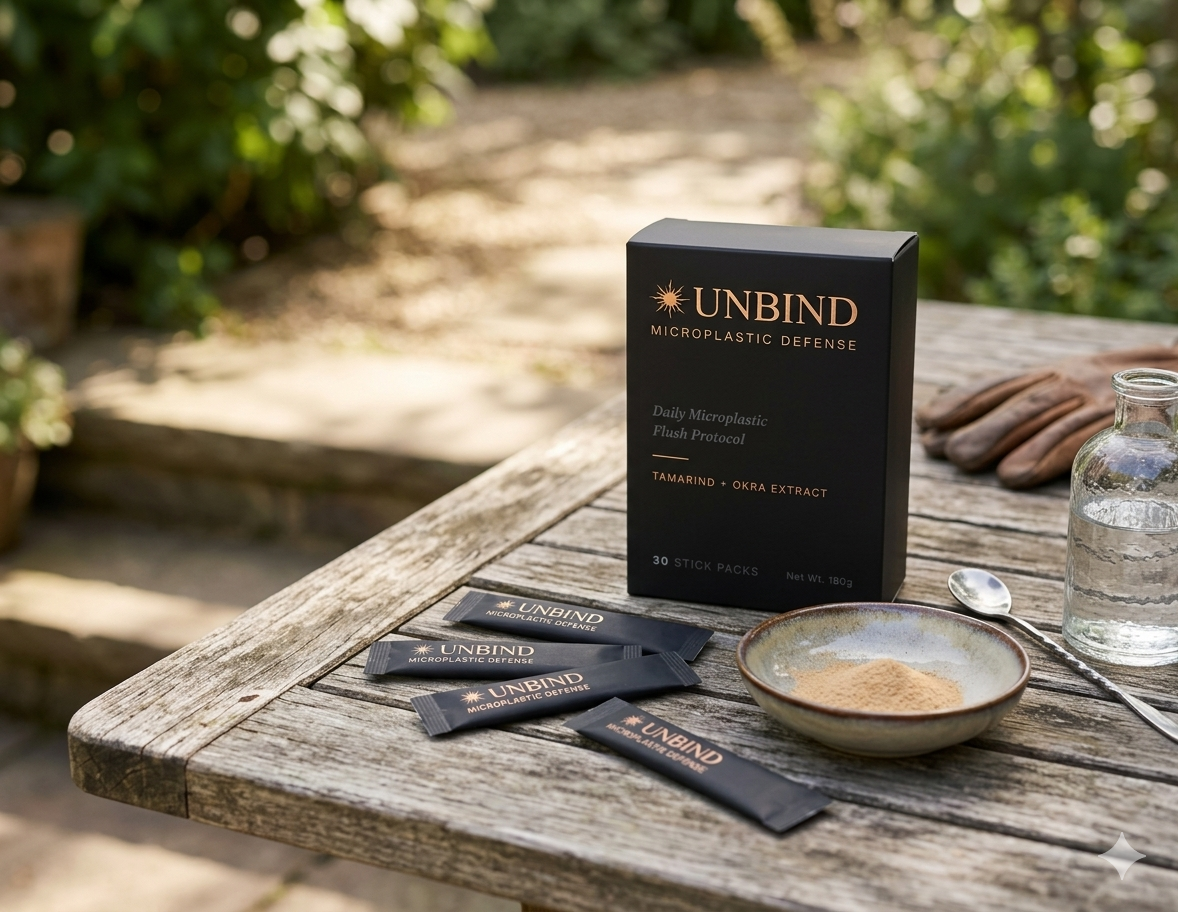
The product is called UNBIND. It's the first daily formula built specifically to bind, trap, and flush microplastic particles from your body.
It contains okra extract and tamarind extract at real doses, not the pixie-dust amounts most companies sprinkle in so they can put it on the label. Plus BioPerine so your body actually absorbs it.
It's not a testosterone booster. It doesn't try to force your body to make more of something that's being destroyed as fast as you make it. It removes the thing doing the destroying. Completely different approach.
One pack a day. Mix with water. Thirty seconds.
It comes with a 90-day guarantee. Not 30 days like most supplement companies. Ninety. Because the full effect builds over 2-3 months and you shouldn't have to decide before you've given it time to work. If you don't feel a difference, in your energy, your clarity, your drive, your mornings, you get every penny back. Even on empty boxes.
I'm not going to tell you it's magic. I'm not going to promise you'll feel 25 again by Friday. I'm going to tell you what I wish someone had told me two years ago:
The reason you feel like this might not be aging. It might not be stress. It might not be low T.
It might be plastic. Sitting in the one place it can do the most damage. Doing exactly what published research says it does.
And for the first time, there's something you can do about it.
UNBIND is the first daily formula designed to bind, trap, and flush microplastic particles from your body. Two plant extracts. Real doses. 90-day guarantee.
Learn More About UNBIND →